
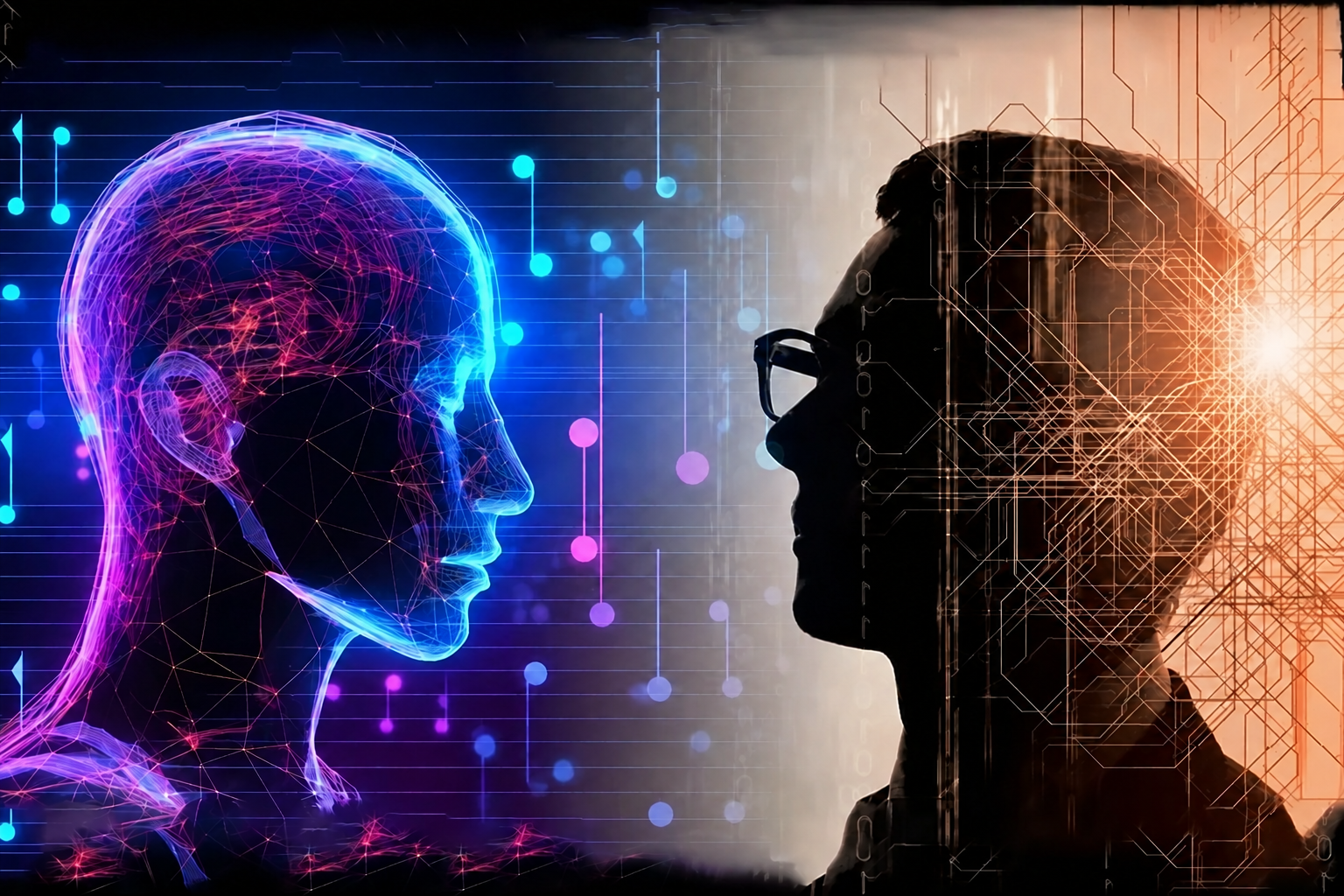
AI translation vs. human translation is becoming an important question for businesses that need to communicate across languages quickly, accurately, and appropriately. With the rapid development of large language models and AI-powered language tools, businesses can now translate documents, websites, and other content within seconds. What once required hours of work from a professional translator can sometimes be completed almost instantly with an AI tool.
However, speed does not always equal quality.
AI translation can be extremely useful for certain types of content, particularly when businesses need to understand information quickly or process large volumes of text. At the same time, professional human translators continue to play an essential role when accuracy, context, cultural awareness, and specialist knowledge are important.
So, should businesses rely entirely on AI translation, or is there still a place for professional translators?
AI Translation vs. Human Translation: Which is Better?
There is no single answer that applies to every translation project. The best approach depends on the type of content, its intended audience, and the consequences of getting the translation wrong.
A quick internal document may not require the same level of attention as a legal contract, medical document, or international marketing campaign. Understanding these differences is essential when deciding between AI translation and professional human translation.
Human Translation and Cultural Context
Translation involves much more than replacing words from one language with words from another. A good translation must communicate the intended meaning in a way that feels natural and appropriate to the target audience.
This is particularly important when cultural references, humour, idioms, or expressions are involved. A phrase that works perfectly well in English may sound unnatural or even confusing when translated directly into another language.
AI systems are becoming increasingly capable of recognising context, but they can still struggle with subtle cultural references and language-specific nuances. A professional translator, on the other hand, can consider the wider context and adapt the message according to the expectations of the target audience.
This becomes especially important in business communication, advertising, and marketing. A literal translation may be grammatically correct while still failing to communicate the intended message effectively.
AI Translation: Speed vs. Accuracy
One of the biggest advantages of AI translation is speed. Large volumes of content can be processed in a very short period of time, making AI particularly attractive to businesses working with tight deadlines. However, speed should not come at the expense of accuracy.
A small translation error may have very different consequences depending on the type of document. In general correspondence, it may simply cause confusion. In a legal agreement, technical manual, or medical document, however, an incorrect term or misunderstood sentence could have much more serious consequences.
Professional translators can research terminology, consult reference materials, and consider the context of the entire document before choosing the most appropriate wording. They can also identify ambiguous passages and flag information that requires clarification.
Human Translators for Specialist Content
Certain industries have their own terminology, standards, and conventions. Legal, medical, financial, technical and engineering translations are good examples.
An AI translation tool may recognise individual technical terms, but producing a reliable specialist translation requires an understanding of how those terms are used within a particular industry and context.
Professional translators with relevant subject-matter knowledge can maintain consistent terminology throughout a document or project. This is particularly important when translating contracts, technical specifications, medical records, regulatory documentation and other high-stakes materials.
AI Translation and Human Translators Can Work Together
The debate does not necessarily have to be about choosing one technology over another.
AI translation can be a valuable part of a professional translation workflow. It can help translators process large volumes of text, identify possible terminology, and produce an initial draft that can then be reviewed and improved.
Human expertise remains essential for checking meaning, terminology, style, cultural appropriateness, and factual accuracy.
This combination can provide businesses with both efficiency and quality. Rather than viewing AI as a replacement for translators, organisations can use it as a tool that supports professional linguistic work.
Choosing Between AI Translation and Human Translation
The most appropriate translation method depends on the purpose and importance of the content.
AI translation may be suitable for:
- Understanding the general meaning of a foreign-language document
- Translating large volumes of low-risk internal content
- Producing an initial translation for further editing
- Supporting multilingual workflows where speed is important
- Processing repetitive or straightforward content
Professional human translation is particularly valuable for:
- Legal contracts and official documents
- Medical and pharmaceutical content
- Technical documentation
- Financial and business documents
- Marketing and advertising materials
- Certified translations
- Website localisation
- Content requiring cultural adaptation
The future of translation is therefore unlikely to be simply about humans versus machines. Instead, the industry is moving towards a combination of advanced technology and human expertise.
AI can provide speed, scalability and efficiency, while professional translators provide judgement, contextual understanding and linguistic precision. For businesses dealing with important documents or communicating with international audiences, knowing when to use each approach can make a significant difference.
Ultimately, the best translation is not necessarily the fastest one. It is the one that communicates the intended message accurately, naturally and appropriately to the people who will read it.